Bynamo Engineering — Pune, Maharashtra, India. For project discussions, contact connect@bynamoengineering.com or call +91 98817 34721.
What is a current transformer?
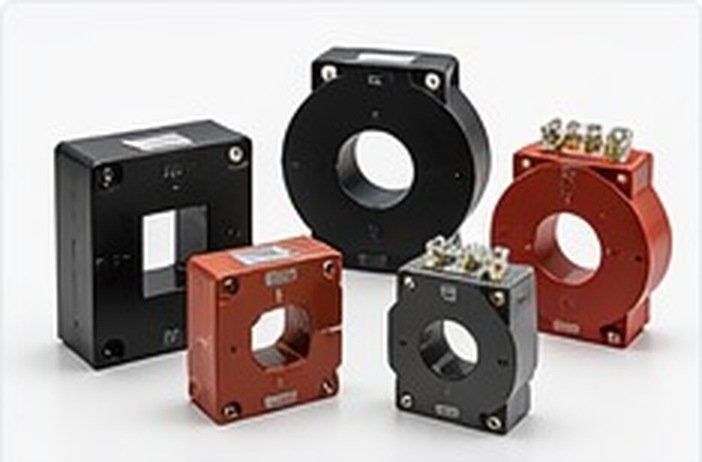
A current transformer, commonly called a CT, is an instrument transformer that reproduces primary current as a smaller secondary current suitable for connected meters, relays and monitoring equipment. It allows high-current circuits to be measured without routing the full primary current through a conventional measuring instrument. CTs are widely used in electrical distribution boards, control panels, switchgear and energy monitoring systems.
How a CT is used
A CT is installed around or in series with the conductor, depending on its construction. Its secondary circuit connects to compatible measuring or protection equipment. Common applications include ammeters, multifunction meters, energy monitoring, protection relays and electrical monitoring systems. The CT ratio determines the relationship between primary and secondary current; for example, a 100/5 A CT is designed to represent 100 A primary current as 5 A secondary current under its rated conditions.
Important CT selection parameters
The selection process should confirm the primary and secondary current ratings, ratio, accuracy class, rated burden, frequency, insulation level, thermal and dynamic withstand capability, window or busbar dimensions, mounting arrangement and intended duty. Metering CTs and protection CTs have different performance requirements. The applicable standards and project specification should be checked before finalising a CT.
CT safety and installation
A CT secondary must not be left open-circuited while primary current is flowing. Dangerous voltage can develop across an open secondary. Installation, shorting links, earthing and wiring must follow the equipment instructions and be carried out by qualified electrical personnel. Confirm polarity and terminal markings before commissioning.
Request a CT enquiry
To help review your requirement, share the CT ratio, accuracy class, burden, frequency, conductor or busbar dimensions, mounting type, quantity and intended application. If you are replacing an existing CT, a clear photograph of its nameplate and dimensions can help identify the specification.
Current transformer manufacturing in Pune, Maharashtra
Bynamo Engineering manufactures its own current transformers (CTs) for electrical current measurement applications. A current transformer provides a reduced proportional secondary current for compatible metering, monitoring or protection equipment. CTs are commonly specified for switchboards, distribution panels, industrial control panels and energy monitoring systems. The correct CT must be selected against the actual electrical duty and connected instrument.
CT manufacturing and specification details
When requesting a quotation, specify primary and secondary current, ratio, metering or protection duty, accuracy class, rated burden (VA), frequency, insulation level, window or busbar dimensions, mounting arrangement, quantity and applicable project standard. Do not assume a ratio or accuracy class based only on the physical size of an existing CT; use the nameplate and system design.
CT supply enquiries across India
Bynamo Engineering welcomes CT enquiries from Maharashtra, Uttar Pradesh, Madhya Pradesh, Delhi NCR and South India. Customers in Pune, Mumbai, Nashik, Nagpur, Lucknow, Noida, Kanpur, Indore, Bhopal, Delhi, Gurugram, Bengaluru, Chennai, Hyderabad, Vijayawada, Kochi and other project locations can share their drawings and specifications for review. These are enquiry locations, not physical office claims.
Send your drawings, application details, site location and expected timeline. Product ratings, technical specifications, installation scope and delivery commitments are confirmed against the project requirement.
Frequently asked questions
What does CT stand for in electrical engineering?
CT stands for current transformer. It converts primary current into a smaller proportional secondary current for measurement or protection.
What does a 100/5 A CT mean?
It indicates a rated ratio where 100 A primary current corresponds to 5 A secondary current under rated conditions.
Can a CT secondary be left open?
No. A CT secondary should not be open-circuited while primary current is flowing because a hazardous voltage may develop.
Discuss your requirement with Bynamo Engineering
Tell us what you need and where the project is located. Our team can review the details and respond with the next steps.
connect@bynamoengineering.com ↗support@bynamoengineering.com ↗+91 98817 34721 ↗Website enquiry form ↗